






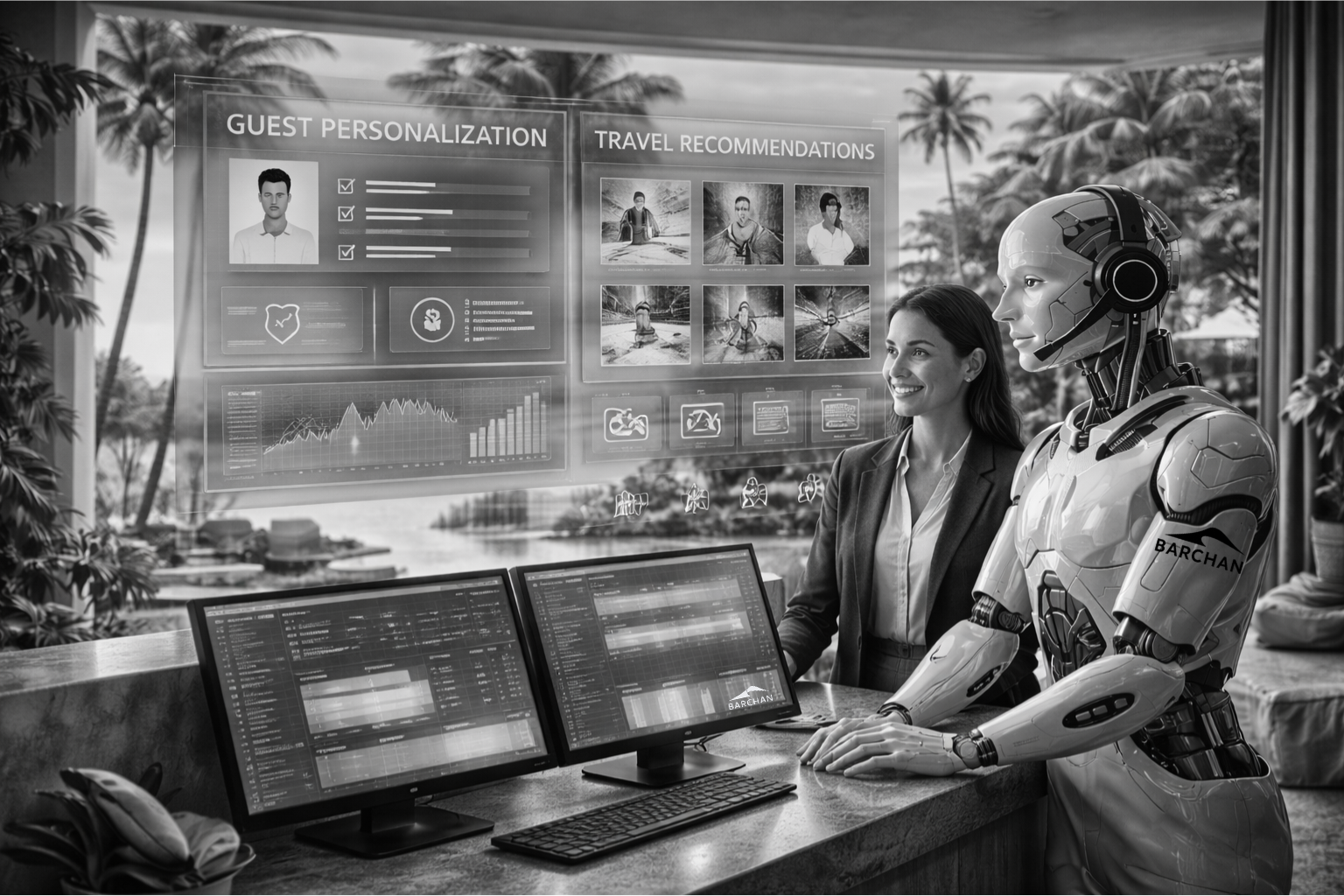

Artificial Intelligence is reshaping the tourism and hospitality sector—not through abstract innovation, but through measurable improvements in guest experience, operational efficiency, and revenue optimisation.
Hospitality is customer-experience driven, making it one of the fastest adopters of AI in areas that directly impact service delivery.
Today, the sector is moving beyond traditional automation toward Generative AI and early forms of intelligent service orchestration. However, as in other industries, maturity varies significantly across use cases.
For executives, the priority is clear: deploy AI where it enhances guest experience and operational performance today, while building the foundation for more advanced capabilities.
From Traditional Automation to Generative AI
Historically, technology in hospitality has focused on:
- Reservation and booking systems
- Property management systems (PMS)
- Revenue management and pricing optimisation
- Basic customer relationship management (CRM)
These systems remain core to operations and are already highly digitised.
Generative AI
Generative AI is now extending these capabilities by enabling:
- Natural language interaction with guests across channels
- Automated generation of personalised recommendations and itineraries
- Real-time translation and multilingual communication
- Dynamic content creation for marketing and guest engagement
Among emerging capabilities, guest interaction and service personalisation are currently the most mature and widely deployed generative AI use cases.
Agentic AI
Agentic AI—systems capable of coordinating multi-step service workflows—is beginning to appear in hospitality environments.
Early applications include:
- Coordinating guest requests across departments (housekeeping, concierge, maintenance)
- Managing end-to-end booking and itinerary changes
- Automating service recovery workflows
However, fully autonomous service orchestration remains limited, with most implementations still requiring human oversight.
Key Use Cases: Where Value is Being Realised
Guest Experience and Personalisation
This is the most visible and impactful AI application in hospitality.
AI is used to:
- Analyse guest preferences and behaviour
- Deliver personalised recommendations (rooms, dining, activities)
- Tailor marketing and communication
Generative AI enhances this by enabling:
- Conversational interfaces for guest interaction
- Real-time itinerary generation
- Personalised travel planning
Customer Service Automation
AI-powered systems are widely used to handle:
- Booking inquiries
- Service requests
- FAQs and concierge services
Capabilities include:
- Chatbots and virtual assistants
- Voice-based guest interaction
- Multilingual support
Revenue Management and Pricing Optimisation
AI is already deeply embedded in revenue management systems.
Applications include:
- Dynamic pricing based on demand, seasonality, and market trends
- Forecasting occupancy and revenue
- Optimising distribution channels
Operations and Resource Optimisation
AI is being used to improve operational efficiency across:
- Housekeeping scheduling
- Energy management and sustainability
- Inventory and supply chain management
- Staff allocation
Examples include:
- Predictive maintenance of facilities
- Smart room systems adjusting energy usage
- AI-driven workforce planning
Travel Planning and Booking Ecosystems
AI is transforming how travellers discover and book experiences.
Applications include:
- AI-driven travel recommendation engines
- Personalised itinerary generation
- Dynamic packaging of travel services
Generative AI enables:
- End-to-end travel planning through conversational interfaces
- Integration across flights, hotels, and activities
Strategic Implications for Executives
Focus on Guest-Centric Use Cases
Prioritise areas with direct impact:
- Personalisation
- Customer service
- Booking and engagement
Integrate AI Across the Value Chain
Avoid siloed implementations—focus on:
- Connected systems
- Unified guest data
- End-to-end experience optimisation
Balance Automation with Human Experience
Hospitality remains a people-driven industry.
AI should:
- Enhance service quality
- Reduce friction
- Not replace human interaction entirely
Prepare for Intelligent Service Orchestration
While full autonomy is limited, organisations should:
- Introduce AI into workflows incrementally
- Enable cross-functional coordination
- Build toward more intelligent service systems
The Future: Towards Intelligent Hospitality Ecosystems
The trajectory of AI in tourism and hospitality is clear:
- From standardised service to hyper-personalised experiences
- From manual operations to data-driven optimisation
- From fragmented systems to integrated service ecosystems
However, as with other sectors, progress will be incremental, shaped by customer expectations, operational complexity, and technology maturity.
Conclusion
Artificial Intelligence is already delivering tangible value in tourism and hospitality—but in specific, high-impact areas rather than across the entire guest journey.
The most successful organisations are those that:
- Focus on proven applications
- Integrate AI into core operations
- Enhance—not replace—the human experience
For executives, the opportunity is clear: use AI to elevate guest experience and operational performance today—while building the foundation for intelligent hospitality systems tomorrow.