




Introduction
Over the past three decades, the United Arab Emirates (UAE) has transformed itself from one of the world’s largest defence importers into a rapidly emerging defence industrial power. Through sustained investment, strategic partnerships, technology transfer programmes, and a clear commitment to industrial self-sufficiency, the UAE has built one of the most advanced defence ecosystems in the Middle East.
Today, the UAE defence industry spans aerospace, naval systems, land systems, guided weapons, autonomous systems, cyber security, artificial intelligence, electronic warfare, radar technologies, and advanced manufacturing. UAE defence companies are increasingly competing in international markets, while local capabilities continue to expand across the entire defence value chain.
As geopolitical tensions, technological disruption, and changing security requirements reshape the global defence landscape, the UAE is positioning itself not only as a major customer of advanced defence technologies but also as a significant developer, manufacturer, exporter, and innovator.
The Origins of the UAE Defence Industry
Since the federation’s establishment in 1971, the UAE has consistently invested in building modern armed forces capable of protecting national sovereignty and supporting regional stability.
During the 1970s, 1980s, and much of the 1990s, the country’s defence requirements were primarily met through imports from leading defence suppliers in Europe, North America, and later South Korea and other international partners.
Recognising the strategic importance of sovereign defence capabilities, the UAE gradually shifted its focus toward developing indigenous industrial capacity. The objective was not only to reduce dependence on foreign suppliers but also to support economic diversification, create high-value employment, and establish advanced technology sectors aligned with the country’s long-term development goals.
This vision accelerated significantly during the early 2000s as government entities began investing in defence manufacturing, maintenance, systems integration, and technology development.
Building a National Defence Industrial Base
The UAE’s defence industrial strategy has been built around several key principles:
- Strategic partnerships and technology transfer.
- Local engineering, manufacturing, assembly and systems integration.
- Development of national engineering talent.
- Investment in research and development.
- Support for defence exports.
- Creation of globally competitive defence companies.
- Integration of advanced technologies such as AI, autonomy, and cyber capabilities.
Unlike many countries that attempted to build defence industries independently, the UAE adopted a collaborative model, partnering with leading international defence companies while simultaneously developing local expertise and intellectual property.
This approach has enabled the UAE to accelerate capability development while minimising technological risk.
The Emergence of National Defence Champions
EDGE Group
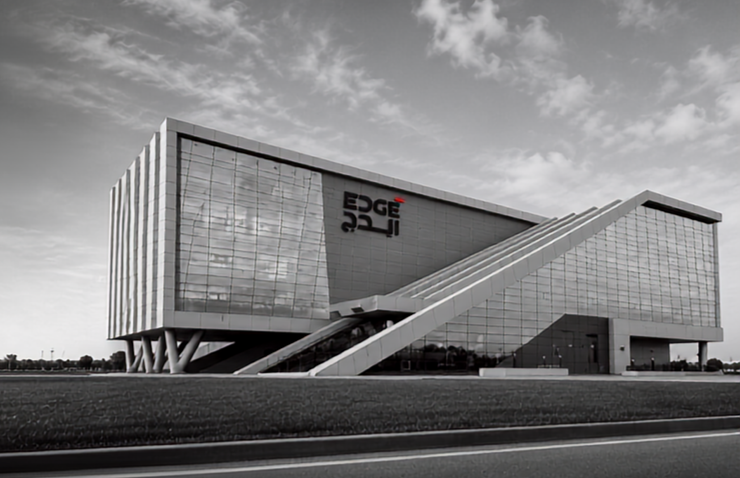
The most significant milestone in the development of the UAE defence industry was the establishment of EDGE Group in 2019.
Created through the consolidation of numerous defence and technology companies, EDGE rapidly became one of the world’s largest defence groups.
Today, EDGE consolidates more than 35 entities across six core clusters: Platforms & Systems, Missiles & Weapons, Space & Cyber Technologies, EDGE Commercial, Technology & Industrialisation, and Homeland Security.
EDGE has transformed the UAE defence landscape by consolidating capabilities, increasing investment in innovation, and creating a globally competitive defence technology ecosystem. More recently, EDGE has accelerated its international expansion strategy through the establishment of new industrial partnerships and overseas entities in Europe, Latin America, and other key markets, reinforcing its ambition to become a globally integrated defence technology group.
Within only a few years, EDGE entered the ranks of the world’s leading defence companies and has become a major exporter of advanced defence systems.
Tawazun and Industrial Development
The UAE’s industrial development has also been supported by Tawazun Council, which plays a central role in defence procurement, industrial participation programmes, and capability development.
Through offset and industrial participation mechanisms, Tawazun has helped attract foreign investment, facilitate technology transfer, and develop local manufacturing capabilities.
This approach has enabled the UAE to convert defence spending into long-term industrial and economic growth.
Major Achievements of the UAE Defence Industry
1. Aerospace and Aviation
The UAE has developed significant aerospace capabilities covering:
- Maintenance, repair and overhaul (MRO).
- Aircraft design and manufacturing.
- Unmanned aerial systems (UAS).
- Space technologies.
Organisations such as AMMROC have established the UAE as a regional centre for military aircraft sustainment and support. Companies such as CALIDUS have further expanded the UAE’s aerospace capabilities through the development and manufacture of military aircraft, while international partnerships are increasingly integrating the UAE into global aerospace and defence manufacturing supply chains.
The country’s aerospace ecosystem now supports both domestic and international customers.
2. Autonomous Systems and Artificial Intelligence
The UAE has become a regional leader in autonomous systems development.
Companies within the EDGE portfolio have developed:
- Autonomous aerial systems.
- Collaborative combat aircraft.
- Loitering munitions.
- Unmanned ground vehicles.
- Autonomous and unmanned maritime systems.
The increasing convergence of artificial intelligence, sensors, autonomy, and advanced communications is creating opportunities for the UAE to compete in rapidly growing defence technology segments. The emergence of companies such as Marakeb Technologies also highlights the UAE’s growing expertise in autonomous maritime systems and AI-enabled vessel operations.
3. Precision Weapons and Missile Systems
One of the most notable achievements has been the development of indigenous precision-guided weapons.
Through local development, investment in missile engineering capabilities, and international partnerships, UAE companies now manufacture and export advanced guided munitions, loitering munitions, precision strike systems, and missile technologies.
These capabilities represent a significant evolution from the country’s earlier role as a purely importing nation.
4. Radar and Sensor Systems
The UAE is increasingly investing in advanced radar, surveillance, and sensor technologies through a combination of indigenous development and international partnerships.
Recent initiatives involving global radar leaders are expanding local capabilities in radar design, manufacturing, systems integration, and lifecycle support. These developments support national requirements in air surveillance, air and missile defence, coastal security, counter-UAS operations, and critical infrastructure protection.
The emergence of radar manufacturing and engineering capabilities represents an important step in the UAE’s transition from defence importer to defence technology producer.
5. Naval Systems
The UAE has also invested heavily in maritime security and naval capability development.
Local companies have developed expertise in:
- Interceptors, fast patrol boats, offshore patrol vessels (OPVs), and corvettes.
- Autonomous and unmanned maritime systems.
- Naval combat management systems.
Through ADSB, Marakeb Technologies, emerging naval joint ventures, and international partnerships, the UAE is increasingly developing capabilities in naval design, systems integration, combat management systems, advanced sensors, autonomous maritime technologies, and internationally competitive naval shipbuilding programmes.
Given the strategic importance of the Arabian Gulf and surrounding maritime routes, naval modernisation remains a national priority.
6. Land Systems
The UAE has developed a growing portfolio of indigenous land systems ranging from protected mobility vehicles and infantry fighting vehicles to advanced artillery, missile launch systems, and robotic ground platforms.
Local companies have developed expertise in:
- Protected mobility vehicles.
- Armoured personnel carriers.
- Infantry fighting vehicles.
- Tactical and logistics vehicles.
- Artillery and rocket systems.
- Missile launch platforms.
- Robotic and autonomous ground systems.
Through organisations such as NIMR, AL JASOOR, CALIDUS and other members of the UAE defence ecosystem, the country has established itself as one of the leading military vehicle and land systems manufacturers in the Middle East, with products increasingly serving both domestic and export markets.
7. Cyber Security and Electronic Warfare
As modern conflicts increasingly extend into the digital domain, the UAE has invested heavily in cyber defence and electronic warfare capabilities.
Today, the country possesses growing capabilities in:
- Cyber defence.
- Signals intelligence.
- Electronic support measures.
- Electronic attack systems.
- Critical infrastructure protection.
- Secure communications.
These capabilities support both national security and the broader digital economy.
The Role of International Partnerships
A defining characteristic of the UAE defence industry has been its ability to build strategic partnerships with leading global defence companies. These partnerships have evolved from traditional customer-supplier relationships into long-term industrial collaborations focused on technology transfer, local manufacturing, capability development, and joint innovation.
Over the years, the UAE has collaborated with a wide range of international defence and aerospace companies, including Lockheed Martin, Boeing, RTX, Airbus, General Atomics, Saab, Thales, Leonardo, MBDA, Naval Group, Fincantieri, CMN NAVAL, Indra, HENSOLDT and Rheinmetall, supporting technology transfer, industrial development, capability enhancement, workforce development, and the growth of local manufacturing and engineering expertise.
These partnerships have enabled technology transfer, local manufacturing, workforce development, and access to global supply chains.
Increasingly, however, UAE companies are moving beyond technology recipients and becoming co-developers, manufacturers, and industrial partners in international defence programmes spanning radar systems, aerospace, autonomous systems, advanced electronics, naval platforms, and next-generation defence technologies.
Defence Exports and International Expansion
The UAE defence sector has increasingly focused on export growth.
Systems developed in the UAE are now marketed across:
- Middle East.
- Africa.
- Asia-Pacific.
- Eastern Europe.
- Latin America.
This export strategy supports industrial sustainability while strengthening diplomatic and strategic relationships with partner nations.
UAE defence companies are also increasingly pursuing international industrial footprints through joint ventures, overseas subsidiaries, and local manufacturing partnerships, enabling access to new markets while supporting global supply chains.
The expansion of defence exports also aligns with the UAE’s broader economic diversification agenda.
Strategic Importance of the Defence Industry
The UAE defence industry contributes directly to several national objectives.
National Security
Sovereign defence capabilities reduce strategic dependence and improve operational readiness.
Economic Diversification
Defence manufacturing creates high-value industries and supports the transition toward a knowledge-based economy.
Technology Development
Defence investment drives innovation in aerospace, AI, robotics, cybersecurity, advanced materials, and manufacturing.
Human Capital Development
The sector provides opportunities for engineers, scientists, technicians, and technology entrepreneurs.
Global Influence
A strong defence industry enhances the UAE’s strategic relevance and international partnerships.
Future Milestones and Opportunities
The next decade is likely to be transformational for the UAE defence sector.
Advanced Autonomous Systems
The UAE is expected to become a major developer and exporter of autonomous defence platforms across air, land, and maritime domains.
Artificial Intelligence Integration
AI-enabled decision support, autonomous operations, predictive maintenance, and sensor fusion will become increasingly important across military operations.
Space and Defence Convergence
The integration of defence and space capabilities will create new opportunities in communications, intelligence, surveillance, reconnaissance, and space domain awareness.
Advanced Radar and Air Defence Systems
Growing regional security requirements are expected to drive investments in:
- Air and missile defence.
- Counter-UAS systems.
- Coastal surveillance.
- Long-range radar networks.
- Multi-domain sensor integration.
- Integrated command-and-control systems.
- Indigenous radar design and manufacturing capabilities.
Expansion of Defence Exports
As indigenous technologies mature, defence exports are expected to become an increasingly important contributor to the UAE economy.
Conclusion
The UAE defence industry has undergone a remarkable transformation in a relatively short period. From a nation largely dependent on imported military equipment, the UAE has developed one of the most sophisticated defence industrial ecosystems in the Middle East.
Through strategic investment, international partnerships, technology transfer, and a relentless focus on innovation, the country has established itself as an emerging global defence technology leader.
Organisations such as EDGE, Tawazun, and a growing network of advanced technology companies are creating capabilities that extend far beyond traditional defence manufacturing. The convergence of aerospace, artificial intelligence, autonomous systems, cyber technologies, and advanced manufacturing is positioning the UAE at the forefront of next-generation defence innovation.
As geopolitical competition intensifies and defence technologies continue to evolve, the UAE is increasingly shaping—not simply participating in—the future of the global defence industry.