






Artificial Intelligence is transforming aviation, logistics, and transport—not through speculative innovation, but through measurable improvements in efficiency, reliability, safety, and customer experience.
These sectors are inherently complex, time-sensitive, and data-intensive, making them well suited to AI adoption. However, due to safety, regulatory, and operational constraints, implementation has been incremental and highly focused on high-value use cases.
Today, the industry is evolving from traditional optimisation systems toward Generative AI and early forms of intelligent operational coordination. As in other sectors, maturity varies across applications.
For executives, the priority is clear: deploy AI where it enhances operational performance today, while building the foundation for intelligent, integrated mobility systems.
From Traditional Optimisation to Intelligent Systems
Historically, AI and advanced analytics in these sectors have focused on:
- Route and network optimisation
- Fleet management and scheduling
- Demand forecasting
- Maintenance planning
These capabilities are well established and widely deployed across aviation and logistics operations.
Generative AI
Generative AI is now extending these capabilities by enabling:
- Natural language interaction with operational systems
- Automated reporting and operational insights
- Enhanced customer communication and service
- Knowledge management across complex operational environments
Among emerging capabilities, customer service, operational insights, and internal productivity are currently the most mature generative AI applications.
Agentic AI
Agentic AI—systems capable of coordinating multi-step operational workflows—is beginning to emerge.
Early applications include:
- Coordinating logistics workflows across supply chains
- Managing disruptions in transport networks
- Automating service recovery in aviation operations
However, fully autonomous network management remains limited, particularly in safety-critical aviation environments.
Key Use Cases: Where Value is Being Realised
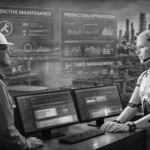
Predictive Maintenance and Asset Management
This is one of the most mature and critical AI applications in aviation and transport.
AI systems analyse sensor and operational data to:
- Predict equipment and aircraft component failures
- Optimise maintenance schedules
- Reduce unplanned downtime
Route Optimisation and Network Planning
AI is widely used to optimise:
- Flight routes and scheduling
- Shipping and delivery routes
- Fleet utilisation
Machine learning models enable:
- Dynamic route optimisation based on real-time conditions
- Improved fuel efficiency
- Reduced transit times
Supply Chain and Logistics Optimisation
AI plays a central role in modern logistics operations.
Applications include:
- Demand forecasting
- Inventory optimisation
- Warehouse automation
- Last-mile delivery optimisation
AI enables:
- Real-time visibility across supply chains
- Better coordination between stakeholders
- Faster and more reliable delivery
Customer Experience and Passenger Services
AI is transforming customer interaction across aviation and transport.
Applications include:
- Personalised travel recommendations
- AI-powered customer service and support
- Real-time updates and disruption management
Generative AI enhances this by enabling:
- Conversational interfaces for passengers
- Automated communication during disruptions
- Personalised journey experiences
Operations Control and Disruption Management
Operational complexity is a defining feature of these sectors.
AI is used to:
- Monitor operations in real time
- Predict disruptions (weather, congestion, delays)
- Support decision-making in control centres
Examples include:
- Airline operations control centres using AI for schedule recovery
- Logistics hubs using AI for dynamic re-routing
Autonomous and Smart Transport Systems
AI is enabling new forms of mobility.
Applications include:
- Autonomous vehicles in controlled logistics environments
- AI-assisted navigation systems
- Smart traffic and transport systems
Strategic Implications for Executives
Focus on Operational Efficiency
Prioritise areas with clear ROI:
- Maintenance
- Routing and scheduling
- Supply chain optimisation
Build Integrated Data Platforms
Effective AI requires:
- Real-time data across operations
- Integration across systems
- Scalable analytics infrastructure
Enhance Customer Experience
AI should improve:
- Passenger and customer interaction
- Service responsiveness
- Personalisation
Prepare for Intelligent Mobility Systems
While full autonomy is limited, organisations should:
- Introduce AI incrementally
- Enable decision support systems
- Build toward integrated, intelligent networks
The Future: Towards Intelligent Mobility Ecosystems
The trajectory of AI in aviation, logistics, and transport is clear:
- From manual coordination to AI-driven operations
- From isolated systems to integrated networks
- From reactive management to predictive and adaptive systems
However, progress will be incremental, shaped by safety, regulation, and operational complexity.
Conclusion
Artificial Intelligence is already delivering significant value in aviation, logistics, and transport—but in specific, high-impact operational areas rather than across the entire ecosystem.
The most successful organisations are those that:
- Focus on proven applications
- Integrate AI into core operations
- Expand capabilities responsibly
For executives, the opportunity is clear: use AI to improve operational performance and resilience today—while building the foundation for intelligent mobility systems tomorrow.